


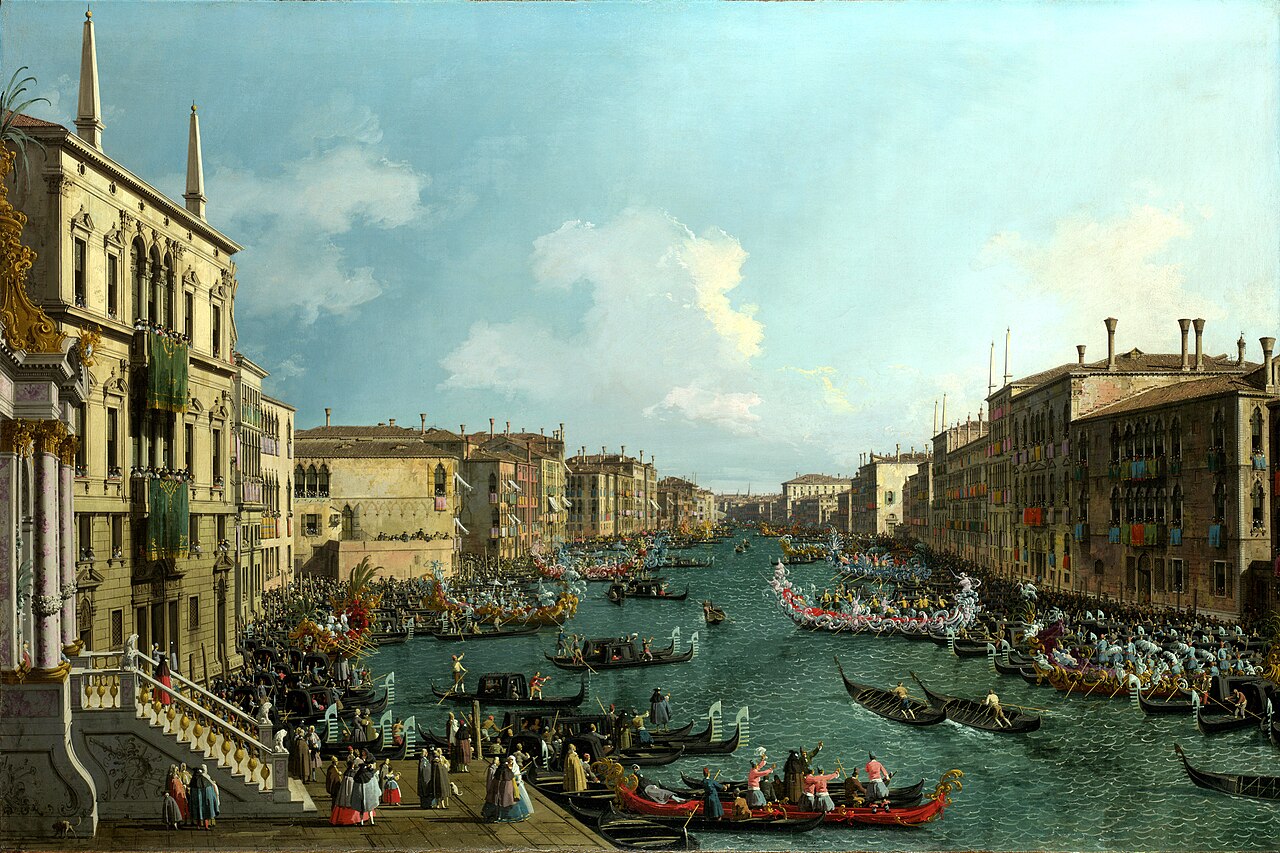


Every year on the first Sunday of September, Venice steps back into history with the Regata Storica.
The Origins
Venetian rowing (called “voga alla veneta”, means, rowing while you stand in the boat: just think about the gondoliers!) wasn't born as a sport, but as a practical necessity for navigating the shallow waters of the lagoon. The first official records of regattas date back to the mid-13th century.
The regattas were not only special events during the year for everyone to enjoy (the latin word “aurigare” means “gareggiare”/“competing”), but also made sure the Venetian oarsmen would always be trained.
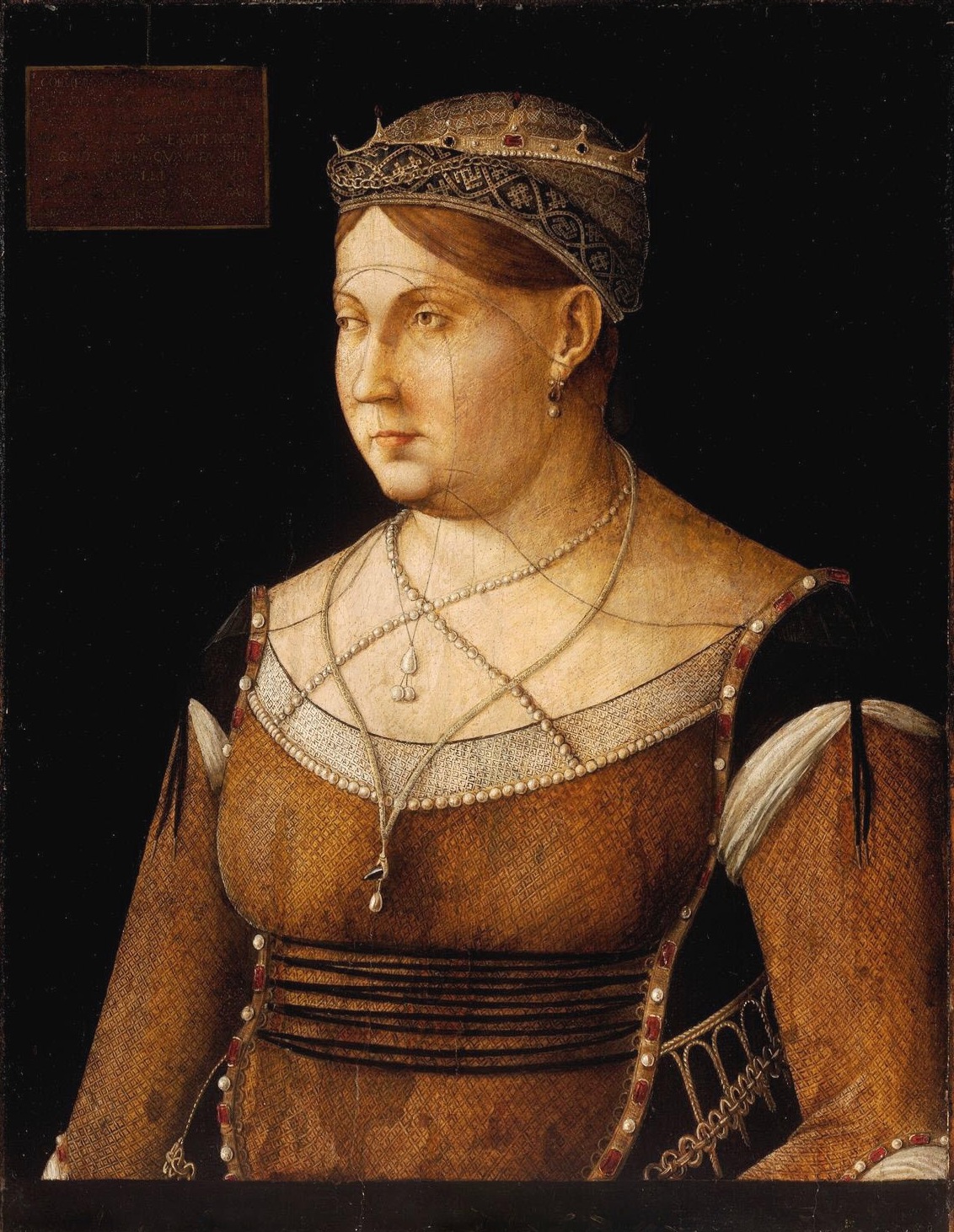
The most famous historical storyline tied to the modern festival dates back to 1489, celebrating Caterina Cornaro, Queen of Cyprus and a native daughter of Venice: She abdicated her throne and ceded control of the island to her homeland.. Her triumphant return was greeted by a lavish fleet of gilded vessels, establishing the grand procession tradition that still opens the regatta today.
Who was Caternina Cornaro
Caterina Cornaro (1454–1510) was a Venetian noblewoman who became the last Queen of Cyprus through her 1468 political marriage to King James II of Cyprus. After the premature deaths of her husband and infant son left her ruling a unstable kingdom, Venice pressured her to abdicate in 1489, formally ceding Cyprus to the Venetian Republic. In return for surrendering her crown, she was granted the sovereignty of Asolo, a picturesque hill town in the Veneto region. There, Caterina established an elegant Renaissance court at her castle, surrounding herself with artists, humanists, and poets—most notably Pietro Bembo, who set his famous dialogues on ideal love, Gli Asolani, in her palace gardens.
You can find Caterina Cornaro’s tomb in Venice in the church of San Salvador close to the Rialto Bridge.
The Regata Storica today
Since 1899 this big event on the Grand Canal is called the “Regata Storica”, thanks to the mayor of Venice, Filippo Grimani, who renamed this regatta in occasion of the 3rd Biennale.
Program for Sunday, September 6, 2026
The event takes place along the Grand Canal, with the finishing line setup near the floating stage (Machina) at Ca' Foscari.
3:30 PM Historical Water Parade
A grand fleet of 16th-century style vessels with crews in rich Renaissance costumes. Led by the Bucintoro (representing the Doge’s royal barge) carrying municipal dignitaries.
4:00 PM Youth Regatta(Maciarele & Schie)
Children under 14 showcase the future of Venetian rowing on two-oared mascarete boats.
4:30 PM & 4:50 PM Young Rowers Competitions
Twin-oared mascarete (young women) and pupparini (young men) categories.
5:10 PM Six-Oared Caorline Regatta
Fast, heavy traditional boats racing down the Grand Canal to the turning pole (paleto) and back.
5:40 PM Women's Twin-Oared Mascarete
A fiercely competitive two-oared race among the city's top female rowers.
6:10 PM Twin-Oared Gondolini Regatta
The main event. Venice's elite champions battle on lightweight, sleek gondolini for ultimate glory.
Link to the official homepage with the program: https://www.regatastoricavenezia.it/programma/
Tips for Attending
Standing along the Grand Canal's banks (rive) is completely free. If your prefer to sit you could book a table in one of the (rooftop) bars or restaurants alongside the Grand Canal.
Be aware that public water bus traffic on the Grand Canal (essentially vaporetti numbers 1 & 2) is halted during the event. Have a look on the website of ACTV to know about the modified schedule of the vaporetti: https://actv.avmspa.it/it
Image sources:
https://commons.wikimedia.org/wiki/File:Gentile_Bellini_002.jpg
https://commons.wikimedia.org/wiki/File:Giovanni_Antonio_Canal,_il_Canaletto_-_Regatta_on_the_Canale_Grande_-_WGA03904.jpg
